
Introduction
With thousands of colleges and courses across India, Choosing the Right College 2026 can feel like navigating a maze. Every year, students struggle to find the ideal institution that aligns with their interests, ambitions, and career goals.
The pressure of making the right choice is immense — after all, your college years play a crucial role in shaping your professional journey.
A wrong decision can lead to wasted time, financial strain, and missed opportunities. The good news? With proper planning and research, you can confidently select a college that matches your aspirations, strengths, and future plans.
This step-by-step guide will walk you through a smart, structured, and stress-free process to help you make an informed choice for your college journey in 2026.
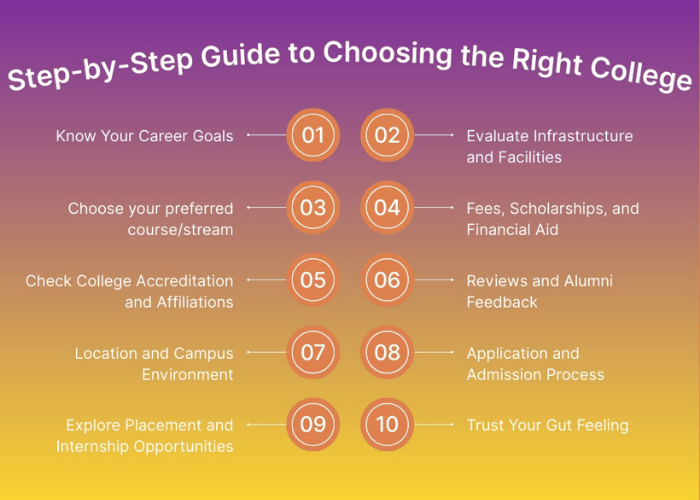
📍 Step 1: Know Your Career Goals
Start by identifying your strengths, passions, and aspirations. Reflect on what excites you — is it technology, art, business, or medicine?
You can also take career counselling sessions or psychometric tests to gain clarity.
👉 Align your college choice with your long-term career path to ensure lasting satisfaction and success.
📘 Step 2: Choose Your Preferred Course or Stream
Once your goals are clear, explore your academic options — Science, Commerce, Arts, or Vocational studies.
Understand the curriculum, specialisations, and job prospects each course offers.
👉 Choose a program that matches your interests and skill set while offering good growth opportunities in the future.
🏛️ Step 3: Check College Accreditation and Affiliations
Before finalising any college, verify its accreditation and recognition. Look for:
- NAAC accreditation (preferably Grade A or above)
- AICTE/UGC approval
- NIRF ranking for national credibility
Accreditation ensures your degree holds value in both India and abroad. Avoid institutions lacking proper recognition, as they may limit your higher education and job opportunities.
📍 Step 4: Location and Campus Environment
Next, consider where you’d like to study — an urban campus with vibrant exposure or a peaceful rural setting for focused learning.
Evaluate factors such as climate, safety, culture, and connectivity.
A healthy environment boosts focus, personal comfort, and overall productivity during your academic journey.
💼 Step 5: Explore Placement and Internship Opportunities
A strong placement record reflects a college’s connection with industry. Check:
- Recruiter lists and average placement packages
- Internship opportunities and corporate tie-ups
- Alumni success stories
Connecting with current students or graduates can give you honest feedback about real-world exposure and employment support.
🏫 Step 6: Evaluate Infrastructure and Facilities
A college’s infrastructure speaks volumes about its learning environment. Ensure it has:
- Well-equipped labs, digital libraries, and Wi-Fi
- Opportunities for sports, clubs, and cultural events
- Comfortable hostels and hygienic facilities
Modern infrastructure promotes better learning and helps you balance academics with personal development.
💰 Step 7: Fees, Scholarships, and Financial Aid
Compare the fee structures of private, government, and deemed universities. Research available scholarships, education loans, and financial aid programs.
👉 Choose affordability without compromising quality. Proper financial planning prevents unnecessary debt after graduation.
💬 Step 8: Reviews and Alumni Feedback
Before making your final decision, check authentic reviews from alumni on trusted platforms — not promotional websites.
Campus visits or virtual tours can also help you get a feel of the college’s facilities, faculty, and learning environment.
📝 Step 9: Application and Admission Process
Keep track of key details — entrance exams, eligibility criteria, and application deadlines. Prepare all necessary documents in advance and apply to multiple colleges for better chances.
Avoid last-minute errors that could cost you an admission offer.
💡 Step 10: Trust Your Gut Feeling
Finally, after thorough research and comparison, trust your instincts. If a college doesn’t feel right despite good credentials, explore other options.
Your comfort level, cultural fit, and intuition are just as important as rankings and infrastructure.
✅ Conclusion
Choosing the right college is not about picking the most famous one — it’s about selecting the one that helps you grow, learn, and achieve your dreams.
By following these steps — understanding your goals, evaluating courses, checking accreditation, and considering placements — you can make a confident, informed decision for a successful academic and professional future.